
Quick answer
Fans are not bad for vegetable gardens when used gently. Indoors and in greenhouses, moving air evens out temperature, removes moisture around leaves and helps seedlings grow sturdier, but a fan that is too strong or too close can dry out and damage plants.
- Plug fans into a GFCI-protected outlet and keep cords clear of watering, misting and standing water.
- A gentle breeze that makes plants sway is fine, but a strong, steady stream causes problems.
- Start with a small fan on its lowest setting and adjust based on how plants respond.
A fan can help a vegetable garden or hurt it, depending on how strong it is, how close it sits and how long it runs. This guide covers both sides.
Are fans bad for vegetable gardens?
Fans are not bad for vegetable gardens when they are used gently. Indoors and in greenhouses, moving air evens out temperature, removes moisture from around the leaves and helps seedlings grow sturdier. A fan that is too strong or too close dries out leaves and soil faster and can damage plants.
3 Ways Fans Are Bad for Vegetable Gardens
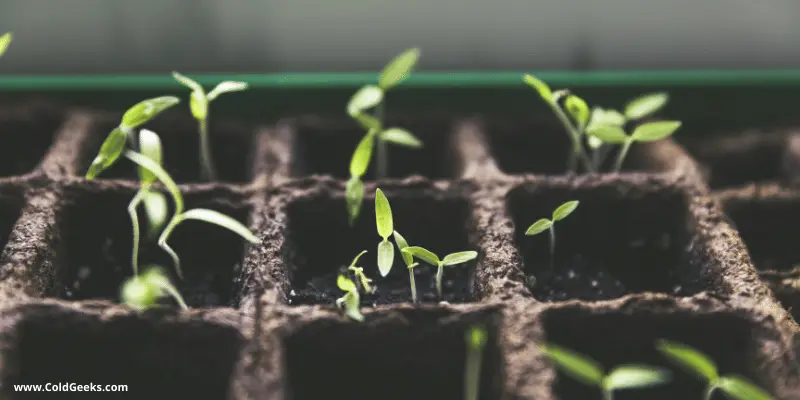
Fans do not usually hurt your vegetable gardens. However, there are three possible ways for fans to harm your vegetables.
Avoid these three things, and you’ll be well on your way to a wonderful garden.
Three ways fans are bad for vegetable gardens:
- When the fan is too strong
- When the fan is too close
- When a strong fan blows straight at your plants
When The Fan Is Too Strong
Strong, constant air movement pulls moisture out of leaves. The Royal Horticultural Society describes wind scorch as leaves with brown, dried-out edges, and notes that plants in pots are at particular risk.
A strong fan also dries soil and potting mix faster, so plants need water more often.
When The Fan Is Too Close
There is no single correct distance. Clemson Cooperative Extension advises placing a fan near seedlings so that it produces a gentle sway. If stems bend hard or leaves flap, move the fan back or turn it down. Even a weak fan can be too much when it sits right next to a plant.
The plants closest to a fan also lose water fastest. According to the USGS, more air movement around a plant means a higher transpiration rate.
When a Strong Fan Blows Straight at Your Plants
A gentle breeze that makes plants sway is fine. A strong stream of air held on the same plants is what causes problems.
In greenhouses, fans are usually not pointed at the crop at all. UMass Extension describes horizontal air flow fans mounted 7 or 8 feet above the floor and pointed toward the opposite end wall, keeping the air moving at 50 to 100 feet per minute.
Are Strong Fans Bad for Vegetable Gardens?
Strong fans can be bad for vegetable gardens.
The larger your grow room, the bigger and stronger fan you need to circulate air.
For greenhouses, UMass Extension gives a rule of thumb: total fan capacity in cubic feet per minute (cfm) should be about two times the floor area in square feet. Its example is a 30 by 100 foot greenhouse, which needs about 6,000 cfm.
However, a fan that is too powerful for a small space will dry out and batter the plants.
If your garden is constructed indoors, a strong fan might be too much for it. Do not get a fan that is bigger than what your grow room can handle.
For seedlings and small indoor gardens, the goal is a gentle sway, not a steady blast.
Of course, it all depends on the size and layout of your growing space.
Are Ceiling Fans Bad for Vegetable Gardens?
A ceiling fan affects plants the same way any fan does: more air movement means faster water loss from leaves and soil. On a low setting the effect is small. On a high setting, check the plants under it for fast-drying soil and browning leaf edges.
If the fan has more than one speed, start on the lowest.
In general, though, slower speeds are better for minimizing the risk of disturbing plants below the fan.
For a ceiling fan in a humid spot, ENERGY STAR advises choosing one that is UL listed with a damp rating. For a fan that may come into direct contact with water, such as on a patio or porch, look for a UL wet rating.
Are Misting Fans Bad for Vegetables?
Misting fans cool by evaporation, which works best in dry air. UMass Extension notes that evaporative cooling is most effective in drier climates such as the Southwest.
On the other hand, misting wets the leaves and raises humidity, and that is where leaf diseases start. UMass Extension notes that condensation on leaves harbors disease organisms, and the RHS says high humidity favors powdery mildew spore production and infection.
Misting does not make plants transpire more. According to the USGS, as the relative humidity of the air around a plant rises, the transpiration rate falls.
Wet conditions favor several vegetable diseases. Bacterial soft rots, caused by bacteria such as Pectobacterium, tend to be more of a problem during wet weather, according to University of Wisconsin Extension. Cornell notes that the water mold behind Phytophthora blight spreads rapidly in water.
Use a misting fan for short spells of dry heat, not humid heat, and stop if the leaves stay wet. Because a misting fan combines water and electricity, plug it into a GFCI-protected outlet and use only a model rated for outdoor use.
Will a Fan Dry Soil in Your Vegetable Garden?
Yes, a fan will help the soil dry out more quickly.
That can help indoors, where soggy potting mix encourages damping off and fungus gnats. A fan does not fix overwatering, though. UC IPM advises letting the surface of container soil dry between waterings.
On the other hand, a fan makes an underwatered garden dry out even faster. Check soil moisture more often while a fan is running.
You must be careful with a fan. It can both help and harm your garden.
5 Reasons Fans Are Good for Vegetable Gardens
Fans can be very useful for vegetable gardens in at least five ways:
- Stimulating seedlings
- Proper airflow
- Prevent excessive dampness
- Fewer mosquitoes while you garden
- Stronger plants
Stimulate Seedlings
If you start your own plants from seeds indoors, a low-powered fan near them will be quite helpful.
Clemson Cooperative Extension recommends placing a fan near seedlings once they have two true leaves, so that they sway gently. It also notes that the fan raises transpiration and dries the seedlings out, so keep an eye on moisture.
As long as you don’t turn a tornado on the seedlings, they should be fine.
Proper Airflow
Fans in enclosed spaces like greenhouses and high tunnel/grow tunnels can be especially useful to provide proper airflow.
Still, humid air favors plant diseases in any season.
UMass Extension says horizontal air flow systems can reduce the incidence of foliar diseases, because the moving air removes moisture from the plant canopy.
This is particularly important if the structure doesn’t have a way to naturally ventilate, such as windows.
Air circulation also evens out temperature. UMass Extension notes that with a properly installed system there should be no more than 2°F difference anywhere in the greenhouse.
If greenhouse vegetables are getting too hot, exhaust fans push heated air out and draw cooler outside air in. Evaporative cooling can go further. UMass Extension says it can cool a greenhouse as much as 10 to 20°F below the outside temperature, and that it works best in drier climates.
Prevent Excessive Dampness
Another use for a fan when starting seeds is generating some extra airflow to ward off excessive dampness.
Seedlings like to grow in a moist environment, but too much moisture can bring on damping off, a disease that kills young seedlings.
Increasing the air movement in your seed-starting room can help you keep moisture levels in better balance.
A fan is only part of the answer. The RHS also advises sowing thinly, not overwatering and keeping seedlings well ventilated to reduce humidity.
Fewer Mosquitoes While You Garden
Fans are not a proven way to keep pests off vegetables. The one well-supported use is comfort for the gardener.
The American Mosquito Control Association notes that mosquitoes are relatively weak fliers, so a large fan on a deck is a low-tech way to keep them off you while you work or sit outside.
For fungus gnats around seedlings, UC IPM advises avoiding overwatering, providing good drainage and letting the surface of the soil dry between waterings. It does not list fans as a control.
Stronger Plants
Finally, a fan can help young plants grow sturdier.
Moving air makes stems sway, and plants respond to that kind of handling by staying shorter and stockier. University of Maryland Extension notes that gently brushing the tops of tomato transplants helps control their height and increase stockiness.
This video covers using a fan when growing seedlings indoors:
Types of Fans for Vegetable Gardens
There are a number of different fans that can help you grow your best vegetable garden (especially in a grow room, grow tent, or greenhouse).
Three types are commonly used: a circulation fan, an inline duct fan and, in dry climates, a misting fan.
A circulation fan moves air around inside the growing space. Some oscillate. Greenhouse horizontal air flow (HAF) fans are fixed and keep the air moving around the house. This is the most useful type for indoor vegetable gardens and greenhouses.
An inline duct fan is mounted in a run of ducting and moves air through it. In a grow tent or grow room it is used for ventilation, usually to exhaust warm, humid air so that fresh air is drawn in.
A misting fan is worth considering only if you live in a very dry climate.
Misting cools the air by evaporation. Too much misting keeps leaves wet and encourages disease, so use it sparingly.
Fan Safety Around Water and Outdoors
Gardens, greenhouses and seed-starting shelves are damp places, and water and electricity are a dangerous mix.
- Plug fans into a GFCI-protected outlet. The U.S. Consumer Product Safety Commission says a GFCI can protect you from severe electrical shocks, and that it matters most where electrical equipment is near water. Test it at least once a month.
- Do not use an indoor-only fan outdoors or where it can get wet. Check the label and the manual for where the fan is rated to be used.
- If you need an extension cord outside, use one marked for outdoor use. The Electrical Safety Foundation International describes an extension cord as a temporary solution, not permanent wiring.
- Keep fans, plugs and cords clear of watering, misting and standing water.
Final Thoughts
When you garden, small changes can make a very big difference to your success or failure.
The right circulation, humidity, and moisture can mean a bountiful harvest or an expensive and frustrating mess.
Start with a small fan on its lowest setting, watch how the plants and the soil respond, and adjust from there.
What to read next:
Sources
Clemson Cooperative Extension (starting seeds indoors)
UMass Extension (horizontal air flow)
UMass Extension (fan and pad evaporative cooling)
UMass Extension (ventilation for greenhouses)
Royal Horticultural Society (damping off)
Royal Horticultural Society (wind scorch)
Royal Horticultural Society (powdery mildews)
USGS (evapotranspiration and the water cycle)
University of Maryland Extension (starting seeds indoors)
University of Wisconsin Extension (bacterial soft rot)
Cornell (Phytophthora blight)
UC IPM (fungus gnats)
American Mosquito Control Association (FAQ)
U.S. Consumer Product Safety Commission (GFCI fact sheet)
Electrical Safety Foundation International (extension cords)
ENERGY STAR (ceiling fan basics)
Better Homes and Gardens (gardening)
Agronomy (soil quality in home vegetable gardens)
ScienceDirect (Phytophthora)
UrbanOrganicYield
Reviewed October 2026. We corrected the misting fan section and the claims about fan distance, pests and roots, changed the product picks to untested examples, and added electrical safety guidance, using university extension services, the Royal Horticultural Society, USGS, the CPSC, ESFI and ENERGY STAR.